Chef’s note
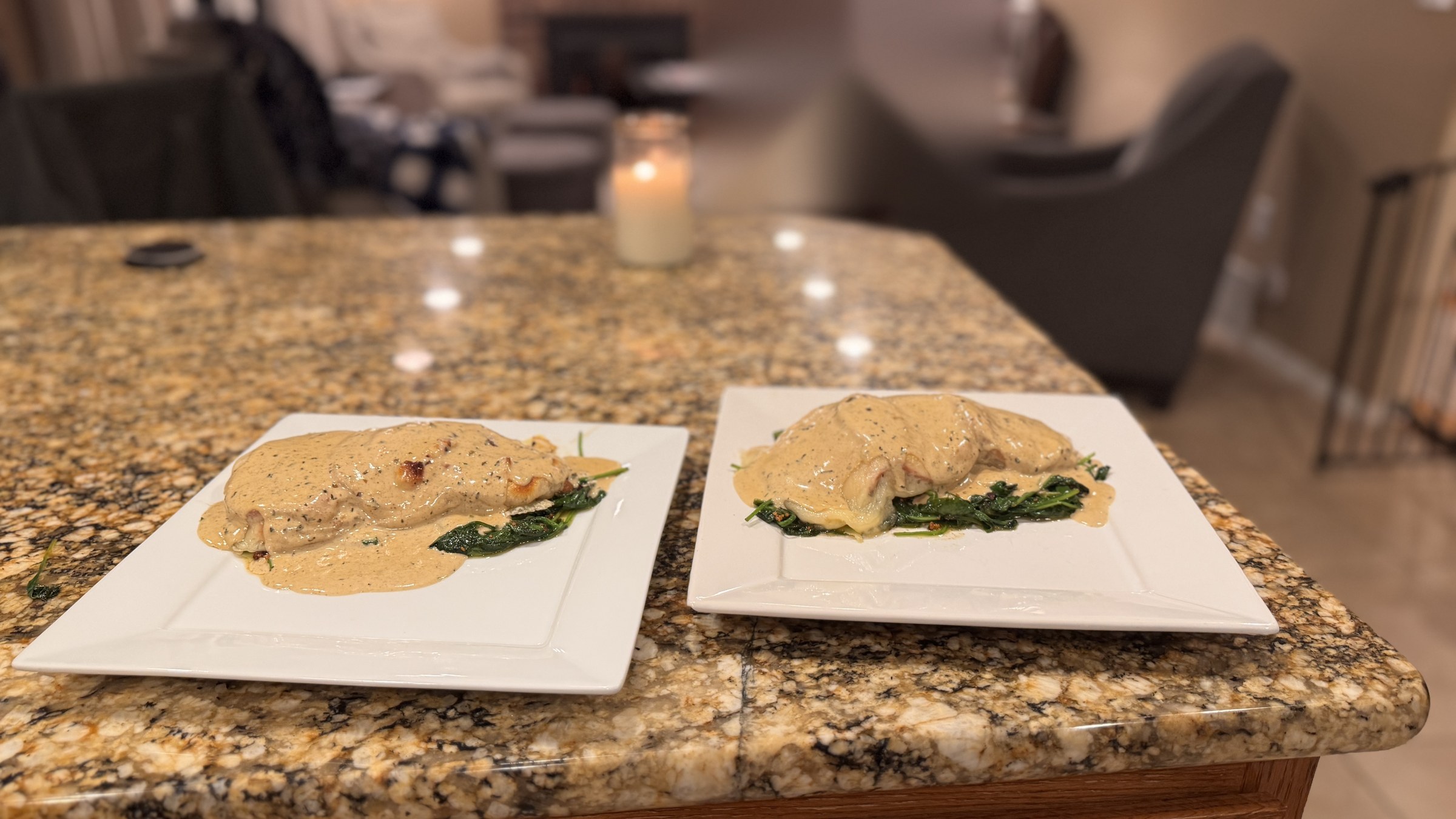
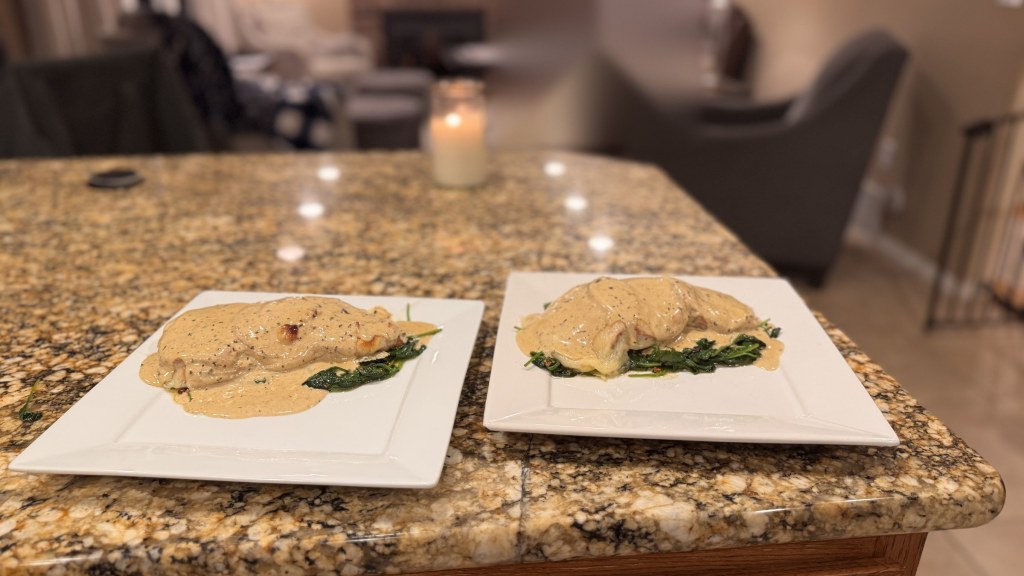
A restaurant-style plate, brought home: golden pan-seared chicken topped with paper-thin ham and melted Swiss, set on a bed of garlicky wilted spinach, ladled with a thick, silky Dijon-cream sauce, and served alongside garlic mashed potatoes. It looks fancy, eats like comfort food, and comes together faster than you’d think.
Chicken Dijon
Serves
4
Prep time
20 minutes
Cook time
30 minutes
Total time
50 minutes
Ingredients
Chicken
- 4 boneless, skinless chicken breasts (about 6 ounces each)
- ¼ cup all-purpose flour, for dredging
- 1 teaspoon kosher salt
- ½ teaspoon freshly ground black pepper
- 2 tablespoons unsalted butter
- 1 tablespoon olive oil
Topping
- 4 ounces (about 8 thin slices) deli ham, sliced paper-thin
- 4 thin slices Swiss cheese (about 1¼ ounces each)
Dijon cream sauce
- ½ cup Dijon Pan-Sauce Base, or the substitute below it
- 1½ cups heavy cream
Garlicky spinach
- 2 tablespoons unsalted butter
- 2 garlic cloves, finely minced
- 1 pound (about 2 large bags) baby spinach
- pinch of kosher salt
To serve
- 4 cups warm garlic mashed potatoes (quick version in the tips)
- 2 tablespoons fresh parsley, finely chopped
- 4 dinner rolls or slices of crusty bread (optional)
- 4 pats of butter (optional)
Instructions
- Pound the chicken. Place each chicken breast between two sheets of plastic wrap or parchment. Pound with a meat mallet (or the bottom of a heavy skillet) to a uniform ¼-inch thickness. Season both sides with salt and pepper.
- Preheat the broiler on high. Pull out a sheet pan and set it aside.
- Make the Dijon cream sauce. In a medium saucepan, combine the Dijon pan-sauce base and heavy cream. Bring to a gentle simmer over medium heat, then reduce to medium-low. Cook, stirring frequently, for 8 to 10 minutes, until the sauce thickens enough to coat the back of a spoon. Keep warm.
- Sear the chicken. Spread the flour on a plate. Heat the butter and olive oil in a large skillet over medium-high heat until the butter is foaming. Working in two batches if needed, dredge each chicken breast in flour (shake off the excess) and add to the pan. Sauté for 2 to 3 minutes per side, until golden brown and cooked through (internal temp 165°F). Transfer to the sheet pan.
- Top and broil. Lay 2 thin slices of ham on each piece of chicken, then 1 slice of Swiss cheese. Broil 4 to 6 inches from the heat for 1 to 2 minutes, just until the cheese is melted and bubbly. Watch closely.
- Wilt the spinach. While the chicken is under the broiler, wipe out the chicken skillet (don’t worry about getting it perfectly clean). Return to medium heat and melt the 2 tablespoons of butter. Add the minced garlic and sauté 30 seconds, just until fragrant. Add the spinach in batches if it doesn’t all fit, tossing with tongs as it wilts. Cook 2 to 3 minutes total — you want it wilted but still bright green, not gray. Season with a pinch of salt.
- Plate. On each warm plate, spread a small bed of garlicky spinach on one half. Slide a chicken breast on top of the spinach. Ladle ¼ to ⅓ cup of the warm Dijon cream sauce over the chicken, letting it pool on the plate. Add 1 cup of garlic mashed potatoes to the other side of the plate. Sprinkle the chicken with chopped parsley. Add a roll and a pat of butter alongside if you like.
Chef’s Tips
- Quick garlic mashed potatoes: Boil 2 pounds of peeled, cubed Yukon Gold potatoes in salted water with 4 whole peeled garlic cloves until fork-tender. Drain. Mash with ½ cup warm cream, 4 tablespoons butter, salt, and pepper.
- Don’t break the sauce. Cream sauces split when overheated. Keep the heat at medium-low and stir often.
- Why pound the chicken? Even thickness = even cooking. A 6-ounce breast pounded to ¼ inch cooks in 4 to 5 minutes total — fast and never dry.
- Pretty plate move: Spread the spinach in a half-moon on the upper half of the plate, sweep the mashed potatoes onto the lower half, and let the sauce drip down between them.
- Scaling note: Halves easily for two; doubles if you have a big enough skillet (or work in batches).
Storage & Make-Ahead
- The Dijon sauce can be made 3 days ahead and reheated gently. Whisk in a splash of cream if it has thickened too much.
- The chicken can be pounded and dredged a few hours ahead — keep on a plate covered with plastic wrap in the fridge.
- Leftover assembled plates keep 2 days in the fridge. Reheat gently, covered, in a 325°F oven for about 15 minutes — high heat will rubberize the chicken and break the sauce.
The Dijon base
Dijon Pan-Sauce Base
The building block for the Chicken Dijon (and any quick Dijon cream sauce): a simple infusion of dry white wine with mustard, salt, and herbs, premixed and stored. Whisk a few tablespoons into hot cream and you’re seconds away from a beautiful, restaurant-style finish.
Makes
About 1½ cups
Prep time
5 minutes
Keeps
1 week, refrigerated
Ingredients
- 1½ cups dry white wine (Chablis, Pinot Grigio, or Sauvignon Blanc)
- 1½ tablespoons Dijon mustard
- 1½ teaspoons dried sage
- ½ teaspoon dried basil
- ¾ teaspoon freshly ground black pepper
- ¾ teaspoon kosher salt
Instructions
- In a medium mixing bowl, whisk all the ingredients together until the mustard is fully dissolved and the herbs are evenly suspended.
- Pour into a clean jar or bottle, seal tightly, and refrigerate.
- Shake well before each use — the herbs settle.
Chef’s Tips
- How to use it: For a quick pan sauce after pan-searing chicken, pork, or fish, add 2 to 3 tablespoons of this base to the hot pan, scrape up the browned bits, then stir in heavy cream (about 3 to 4 times the volume of the base) and simmer until thickened.
- Substitute: No Dijon? Use yellow mustard and add a tiny pinch of dry mustard powder for sharpness.
- Scaling note: Doubles cleanly. The original kitchen made it by the quart and used it daily.
Storage & Make-Ahead
- Keeps 1 week in the fridge in a sealed container.
- Doesn’t freeze well (the wine flavor flattens).
No premix? Quick substitute (enough for one batch)
- ½ cup dry white wine
- 2 teaspoons Dijon mustard
- ½ teaspoon dried sage
- pinch dried basil
- ¼ teaspoon kosher salt
- ¼ teaspoon black pepper
Whisk together and use in place of the ½ cup of base.


Leave a Reply